How to commission a sculpture
If you are thinking about having a portrait made, I am here with a basic step-by-step guide to help you understand the process of privately commissioning a portrait sculpture.
This guide does not cover commissions of larger sculptures or public commissions as they involve more extensive planning and usually also architects, landscaping and other subcontractors. For these commissions, please get in touch directly from the contact page.
Get started by briefly mentioning:
- Name of the person to be portrayed.
- If the person will be able to sit (model) for the portrait.
- Important dates to be taken into consideration.
The five basic steps when commissioning a portrait sculpture
Step 1. Initial conversation and agreement
A commission usually begins with a conversation around budget, hopes, and expectations for the portrait to establish a clear understanding of your vision. Following this, I draft a letter of agreement that outlines your expectations, including the sitter’s availability and the proposed completion date for the clay model. This step ensures that we are aligned as much as possible and sets a solid foundation for the project.
Step 2. Sculpting the clay model
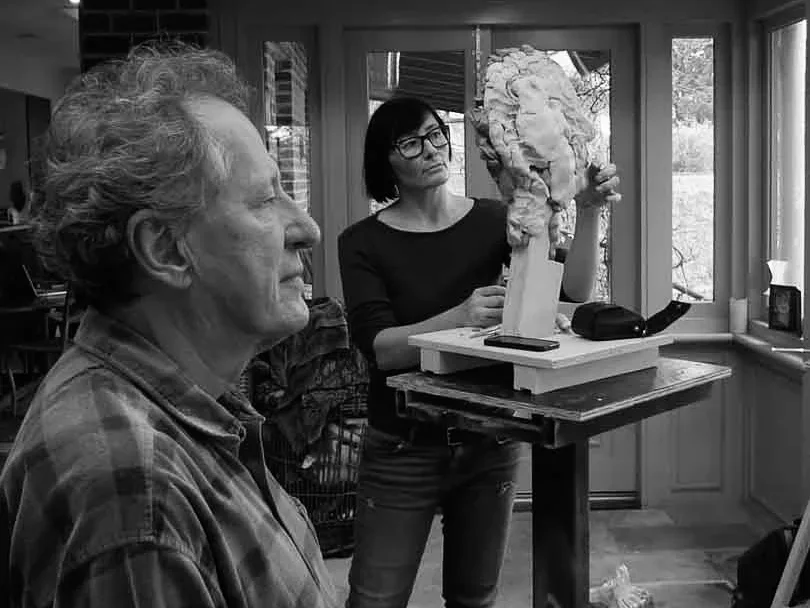
The next step involves sculpting the clay model from life or reference material. I prefer to work directly with the live subject, which typically involves 3 to 4 sittings, each lasting around 2 to 3 hours. These sessions can take place at my studio in Florence or at the sitter’s home, whichever is most convenient.
If the sitter is unavailable or if the portrait is of a historical or deceased person, I can work from photographs and -if available – videos. It requires photographs/videos of the sitter from specific angles (profile/ front/ three quarter views) in order to assure a successful rendering. It’s important to note that working from reference material as opposed to working from life may take longer to achieve the desired accuracy and likeness.
This sculpting phase generally takes around 3 weeks, depending on the scale and complexity of the portrait.
Step 3. Creating a mould
Once the clay model is complete, I create a silicone mould from which a hard copy can be produced. If the final material is plaster or resin, this entire process is completed in my studio, including the creation of a base for the portrait. If it is bronze, the foundry will receive the mould and proceed with the wax and bronze casting production.
Step 4. Creating the portrait
The timeframe and cost of producing a portrait depends significantly on the material chosen. The options range from plaster and resin to bronze and marble. Each material offers different benefits and considerations, which we discuss during your consultation to determine the best fit for your needs.
Bronze casting
For bronze portraits, the process involves several additional steps and can take several months, depending on the foundry’s schedule. I project manage the entire process, which includes visiting the foundry to oversee the preparation of the wax, the bronze casting, assembly, patination, and mounting onto the selected base. This ensures that every detail meets my high standards of quality.
Marble carving
If marble is chosen as the final material, the clay portrait is digitally scanned. This scan is used to subcontract the milling out of the main form from a selected marble block. I then complete the finishing by hand in my studio. Creating a marble portrait can take anywhere between 4 to 8 months, depending on the scale and complexity of the piece, lead times for subcontractors etc.
Step 5. Delivery and installation
Throughout the process, I am available to advise, arrange, and oversee the delivery and installation of your sculpture. My aim is to ensure that your portrait is completed and installed in its intended location to your satisfaction.


